Healthcare Providers
Bridging Healthcare & the Indoor Environment
When a patient’s health may be influenced by their indoor environment, the clinical and environmental sides of the equation are often addressed separately.
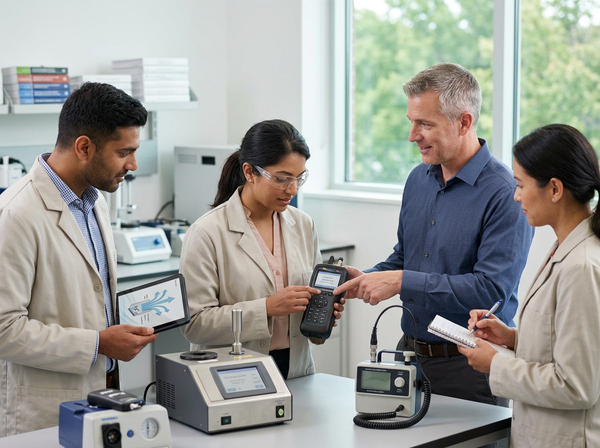
PEPN™ helps bridge that gap.
The Purified Environments Provider Network (PEPN™) connects healthcare providers with trained environmental professionals operating within a structured, health-aligned framework for environmental investigation, remediation, fine-particle cleaning, and verification.
Our goal is not to practice medicine or diagnose environmental illness. It is to help ensure that when a healthcare provider identifies the indoor environment as a potential concern, there is a qualified environmental team prepared to evaluate and address the building appropriately.
A Health-Aligned Approach to the Indoor Environment
Traditional environmental investigations often focus primarily on identifying visible mold, moisture damage, or individual contaminants.
Health-sensitive cases may require a broader perspective.
PEPN-trained professionals are taught to evaluate the indoor environment as an interconnected system—considering potential sources, reservoirs, transport pathways, HVAC distribution, settled particulate, moisture conditions, and opportunities for occupant exposure.
This approach allows environmental professionals to develop an intervention strategy based on conditions within the building while giving healthcare providers useful environmental information to consider alongside their clinical evaluation.
The clinician manages the patient. The environmental professional manages the environment. PEPN helps align the two.How PEPN Supports Healthcare Providers
Healthcare providers do not need to become building scientists, remediation contractors, or environmental investigators.
PEPN provides access to professionals trained to address the environmental side of the equation.
Through the PEPN-HEART™ framework, participating professionals may provide:
Environmental Assessment
Systematic evaluation of moisture conditions, microbial reservoirs, HVAC systems, particulate distribution, potential exposure pathways, and other relevant environmental conditions.
Environmental Testing
Strategic environmental sampling and analytical testing when appropriate to characterize conditions and support environmental decision-making.
Remediation
Correction and removal of identified sources and damaged building materials using appropriate containment, engineering controls, moisture correction, and remediation practices.
Fine-Particle Cleaning & Decontamination
Detailed removal of settled particulate and environmental reservoirs from surfaces, contents, and occupied spaces following source correction.
HVAC & Airflow Considerations
Evaluation of HVAC systems as potential pathways for contaminant transport, deposition, redistribution, and re-entrainment.
Post-Intervention Verification
Objective documentation and environmental verification designed to determine whether the established environmental scope and cleanliness criteria have been achieved.
A Collaborative Model—With Clear Professional Boundaries
PEPN is built around collaboration without blurring professional scopes of practice.
Healthcare providers diagnose and treat patients.
Environmental professionals investigate and address buildings.
A patient's diagnosis, symptoms, or laboratory findings should not be treated as proof of a specific environmental condition within a building. Likewise, environmental testing should not be used by an environmental professional to diagnose disease.
Instead, each discipline contributes information from its area of expertise.
Clinical Findings → Environmental Investigation → Intervention → Verification → Environmental Documentation
This creates a more organized pathway for complex cases while maintaining clear boundaries between healthcare and environmental practice.
Better Information for the Clinical Team
One of the challenges healthcare providers face is receiving environmental reports that provide laboratory numbers without explaining what was found, where it was found, how contaminants may be moving through the structure, or what was done to correct the problem.
PEPN encourages standardized environmental documentation that can provide the clinical team with a clearer picture of the building.
Depending on the project, documentation may include environmental findings, identified reservoirs, moisture conditions, HVAC observations, analytical results, corrective actions, remediation documentation, fine-particle cleaning documentation, and post-intervention verification results.
The objective is not to tell the clinician what the environmental findings mean medically.
It is to give the clinician better environmental information from which to make their own independent clinical decisions.